Before you order
Is this a final takeoff I can bid from?
No. It is a first draft provided as-is, with no warranty of accuracy, completeness or fitness
for purpose. Every line carries a grade and its basis to confirm, so you know what to verify. Apply your own
contingency and judgment before bidding.
My drawings are not all in English. Can you take them?
Yes. We work in English, and text in another language - a whole sheet, a logo, a sign, a note -
is translated as we measure rather than left out. Every line taken from translated text says so at the
start of its basis to confirm, with what the original says, and carries a lower grade: treat our translation
as a first reading to check. If other languages are found, the email we send when work starts says so.
Do you take civil and utility sets, or only buildings?
Both. Roads, bridges, culverts, water and wastewater plants, pump stations and site utilities are
priced by drawing sheets like a building, and measured as DOT-style pay items. A plant with a small building
is read as both. Process equipment and process piping inside a plant (Divisions 40 to 48) are not
measured, and Plan Check shows this before you pay.
What file formats work?
PDF plan sets — the price and every quantity come from the PDF. You may add the DWG/DXF
exported with that same set (same sheets, same revision); we use it only to double-check counts and
areas against the PDF, and a CAD file from another revision is set aside. Specs may come as PDF, Word
or Excel. Crisp scans work; a set
we cannot process is refunded automatically. Quantities come in US units — LF, SF, CY, EA.
What is Plan Check?
The free first step, run entirely in your browser: sheets counted, trades found, duplicate sheet
revisions caught, the scope words (NIC, BY OTHERS, ALTERNATE …) listed by sheet, the schedules your set
carries, door and window marks checked against them, and your fee shown before you pay. It says what your
set contains; nothing is measured. No account, no upload.
What you get
Do you fill in reference rates, or do I price it myself?
You choose before you pay. Quantities only leaves every unit-price cell blank for your own costs. Reference rates (Beta) — $0 now, +$60–$350 by set size from 2027. Our rate library is still growing, so coverage varies by project; check and replace every rate. If the library is not ready by then, the Beta is extended and announced, and the add-on is only ever charged from a date shown before you pay. Tick the words that go with your choice:You choose before you pay. Quantities only leaves every unit-price cell blank for your own costs; reference rates are a paid add-on of $60–$350 by set size (a Trade Pack pays its trades' share, at least $20). Tick the words that go with your choice:
- Quantities only — every unit-price cell blank; every formula and the draft quotation still built.
- Quantities with reference rates — published rates we can defend, each with grade and source, which we take no responsibility for. On recent orders about a fifth to a half of the lines received a rate — about a third on a typical set, and some sets get fewer; the rest stay blank.
Either way you check every price, and your own cell always wins. A reference rate that differs from your own price, a supplier quote or a bid result is not a fault in the package and is not a ground for refund.
What is the Pricing Studio, and where do my prices go?
One file in both the Full and the Trade Draft Takeoff Pack that opens in any web browser, with no internet needed.
- Our quantities are locked; you type your material and labor costs, markup and tax - or one subcontractor's sum for a whole trade.
- Every line shows our reference band beside your cost, and a cost far outside it is flagged so a slipped unit cannot hide in the total.
- The overview shows how the quote is built up, which ten lines carry most of the value, material against labor by trade, and a what-if slider for margin and waste.
- It prints your quotation on paper or as a PDF, with room for your letterhead, plus an internal cost summary for your own file.
- It writes your prices into the workbook as a new copy (-priced-r1, r2 …) and reads them back from it.
Your prices stay on your computer: the file cannot connect to the internet, and we keep no copy.
What happens where the drawings cannot answer?
Where the set implies work it does not detail — reinforcement with no bar schedule, formwork to a
pour — the line is estimated from a published ratio, labelled so and graded low. Where a dimension is simply
not there, the line prints SOURCE INSUFFICIENT, the quantity stays zero, and the reason is given: a dimension
the drawings never give is never invented. If we hold no
published benchmark rate for your building type, the Project Overview leaves its benchmark cost box out and says
so; the quantities are measured all the same.
How fast is delivery, and what does Rush actually buy?
- Full Draft Takeoff Pack: a guaranteed 48 hours from when payment clears, weekends included
- Trade Draft Takeoff Pack: the same 48 hours
- Rush: a guaranteed 24-hour date for +40% of the fee, rounded to the nearest $5 and shown before you pay. Our system keeps a measuring lane reserved for Rush orders, so a Rush order goes to the front of the queue and never waits behind standard work. The work, the method and the checks are the same; what Rush buys is the guaranteed date.
- Miss the date: refunded in full without asking
Money, files and people
Can I get an invoice in my company's name?
Yes. Polar, our merchant of record, sends a receipt and a tax-correct PDF invoice for every order. Add your company name, tax ID and billing address yourself in Polar's customer portal — the link is on your receipt.
How is the price set — and can it change after I upload?
By drawing sheets, in eight bands from $199 — a 600-page submission with 34 drawing sheets, two of them a cover
and a general-notes sheet, is priced on 32.
The fee is shown before you pay and locked when you order, plus applicable sales tax. The sheet count it is set on is
counted in your browser by the rule our intake uses. The count shown before you pay is the count you are charged
on — fixed to the files you upload. It is a fixed price for the whole job, both ways: never raised afterwards, and never lowered - if our reading after payment finds more drawing sheets, we measure them all at the fee you paid. Above 300 sheets a published per-block surcharge
applies, shown the same way, never invoiced afterwards.
A Trade Draft Takeoff Pack is your trades' share of the Full Pack price for
the whole set: that price × your trades' billed sheets ÷ the set's billed sheets, rounded up to a price
ending in 9, from $149 and never more than the Full Pack - tick every
trade and it is the Full Pack price.
Do the cover, notes and specifications count toward the fee?
No. Only plans, elevations, sections, details and schedule sheets are billed. The cover, sheet
index, general notes, code summary and symbols or legend sheets — numbered in the G, T or CS series or in each
discipline's 0-series, such as A0.1 or E001 — are read for the analysis and never charged, and neither
are specifications, addenda, reports or any other document. Plan Check lists the free sheets by number
before you pay. Send the whole set: the notes and specifications answer questions the plans leave open.
A sheet in any of those series titled as a plan or a schedule (T-101 TELECOM PLAN, A0.1 SITE PLAN) is billed, and a sheet whose number or
title cannot be read is counted as billed; Plan Check tells you how many before you pay, and the count
shown is the count you are charged on.
How do refunds work?
No reason asked until your first download, unless the checkout told you before you paid that this order does not carry it: open your order on the
status page
with your order code and ask. Polar, our merchant of record, returns the payment in full. Once you download, the
package is yours and is not refunded on request. A date we miss, a set we cannot read, or a package our checks
stop is refunded without asking.
What if part of my set cannot be measured?
You still get the package, and the Confidence Report says exactly which lines are affected and what
to check — a sheet that was not sent, a detail with no dimension on it, a scan too poor to measure. We would rather
hand you the work with its limits named than hold it back until it is perfect. What we never send is a package that
fails our safety checks: another job's data in your file, a formula that does not compute, a total that is wrong, a
unit from the wrong country. Those are not delivered at all — you are refunded.
Do you keep my drawings?
Your files are read to produce your package and are not published, resold or shown to
another customer. What we keep is the work we produced — the measured quantities and their working — to improve
the system, and we tell you that plainly rather than burying it. Your files sit in our own private, encrypted storage, are measured on a machine we control, and pages are read by our AI model provider under commercial terms that forbid training on them — never an online conversion service, never a file-sharing site. The Terms name every place they go. Your original drawings are deleted 2 days after your package is delivered — we have no reason to keep them, since a refund never requires us to re-open them. The download link for the package itself stays live for 30 days; the package includes marked-up images of the pages we measured, so it is deleted when that link expires.
Who do I talk to if I have questions?
No one needs to be: every quantity shows its source, its basis to confirm and its grade, so the workbook
answers what a call would, and a date we miss, a set we cannot read or a package our checks stop is refunded
in full automatically. There is no phone, chat or support inbox — that is how the fee stays low.

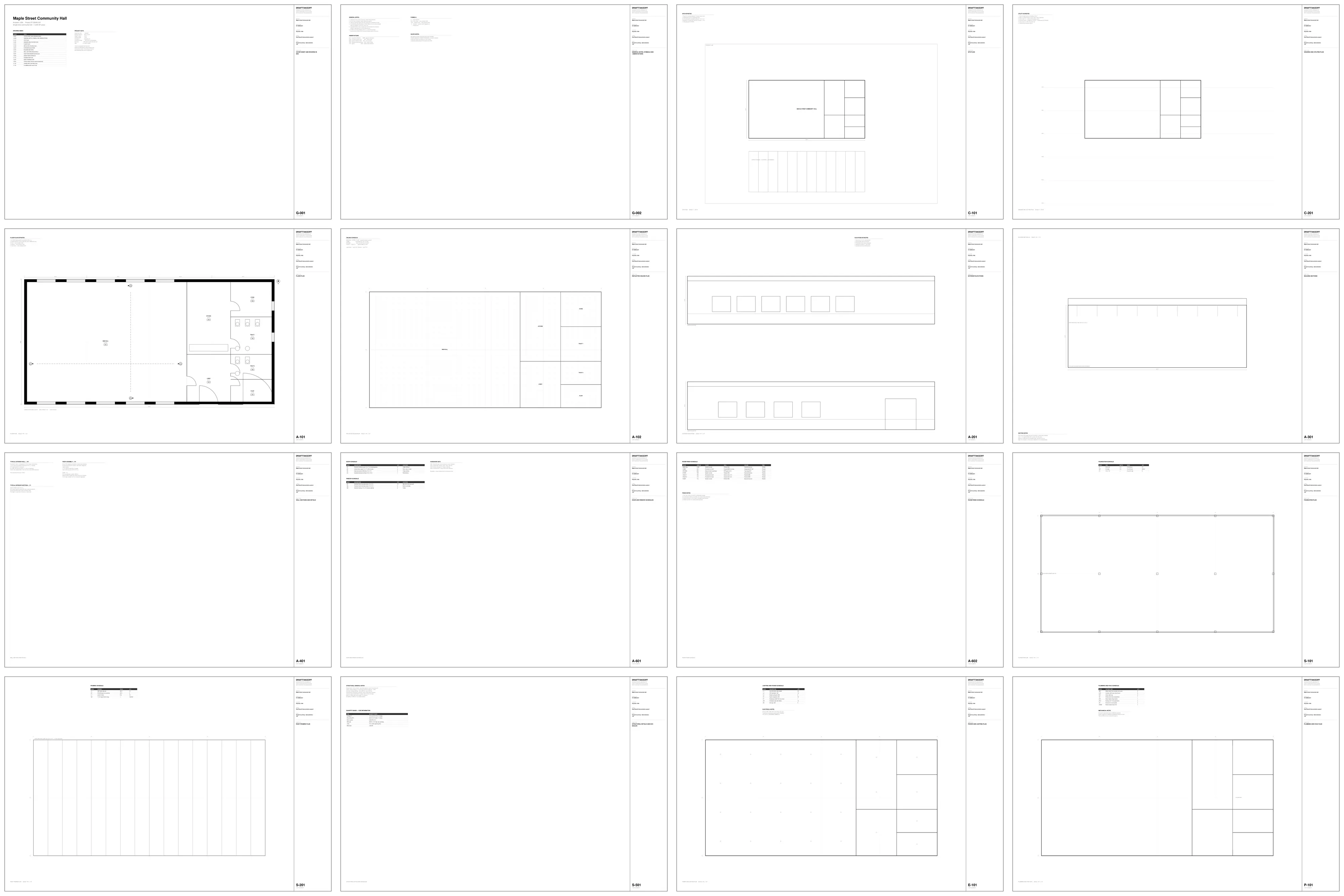









 Six trade tabsthree lines each in the sample; your package carries every measured line18 lines
 Site costs, markup & taxyour overheads and margin, each on its own tab2 tabs
 Your Excel and the quotationwrite your prices into the workbook, print the quoteoffline